Why I Chose Readers Over Revenue
I didn’t make this book free because it lacks value. I made it free because an unread book has no life. This work began as a question, not a product. While writing it, I realised that pricing it too early would limit the very conversations it was meant to start. For now, reaching the right readers matters more than revenue. So for a limited period, I’ve chosen access over earnings. Not as a strategy — but as a principle.
POLITICAL ANALYSIS

Why I Chose Readers Over Revenue
I didn’t make this book free because it lacks value.
I made it free because an unread book has no life.
This work began as a question, not a product. While writing it, I realised that pricing it too early would limit the very conversations it was meant to start. For now, reaching the right readers matters more than revenue.
So for a limited period, I’ve chosen access over earnings.
Not as a strategy — but as a principle.
What is this book about?
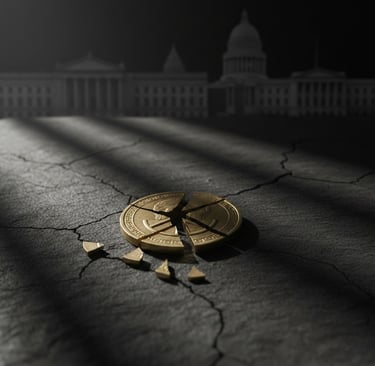
The Unlikely Laureate examines how peace is recognised, evaluated, and remembered — not in theory, but in practice.
The Nobel Peace Prize is often viewed as a moral symbol, awarded to ethical leadership and diplomatic restraint. History, however, reveals a more complicated pattern. Many leaders who reshaped global stability were controversial in their time, misunderstood, or recognised only years later.
Rather than asking who deserves the Nobel Peace Prize, this book asks a harder question:
How do institutions decide what peace looks like — and why do disruptive leaders challenge that process?
Through a structured political analysis, the book explores how timing, public perception, controversy, and institutional caution influence recognition. It focuses on systems rather than personalities, examining why peace shaped through unconventional strategies is often clearer in hindsight than in the present.
This is not a biography.
This is not political endorsement.
It is an examination of how recognition, leadership, and peace rarely align neatly.
👉 The book is currently available to read on Amazon:
https://www.amazon.com/dp/B0GDM8XQZW
If the book speaks to you, an honest review helps more than you might imagine — not for algorithms, but for future readers deciding whether to begin.
Thank you for reading this far.
Sometimes, that itself is enough.
— Piyush
Peace is often judged by comfort, not consequence.
About the Author
Piyush Singh is an independent writer focused on political institutions, recognition systems, and how leadership is evaluated over time.
His work examines the distance between moral ideals and institutional decision-making, encouraging readers to question how outcomes, perception, and history interact.